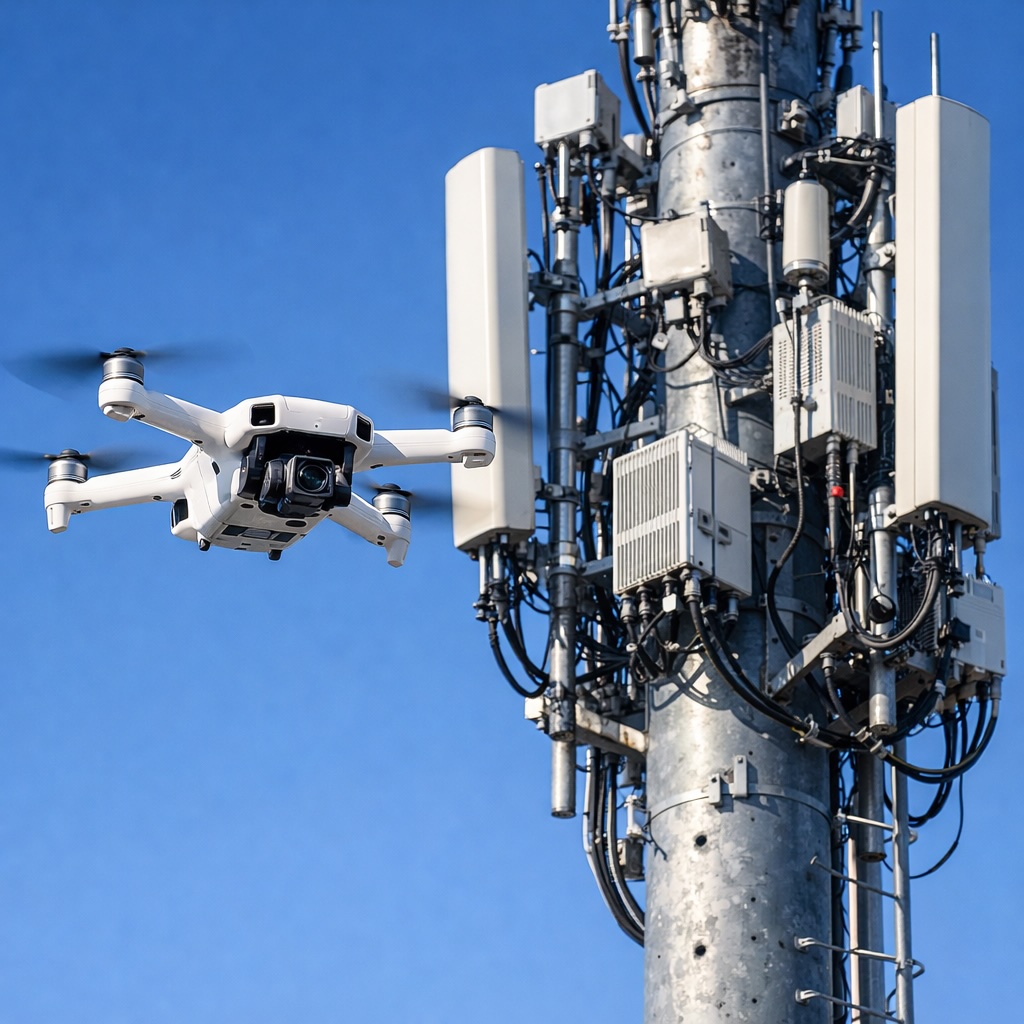
Cell towers are the backbone of our wireless communication networks, but keeping them in good condition is challenging work. Traditional tower inspections require trained climbers to scale structures that can reach hundreds of feet high, working at dangerous heights to examine antennas, cables, and structural components. DJI drones are revolutionizing this process, making inspections safer, faster, and more thorough while reducing costs and improving the quality of inspection data.
Tower climbing is recognized as one of the most dangerous jobs in America. Climbers work at extreme heights, often in challenging weather conditions, accessing equipment on structures that sway in the wind. Despite rigorous safety protocols and training, falls and other accidents occur with tragic regularity. The physical demands are intense, and the stress of working at height affects even experienced professionals.
Traditional inspections require climbers to ascend the tower, visually examine components, take photographs of problem areas, and sometimes take measurements or samples. A thorough inspection of a tall tower might take most of a day, with climbers spending hours at height. The cost reflects both the time involved and the high insurance premiums that come with this dangerous work.
The inspection quality can also vary. Climbers focus on safely moving through the climb while trying to observe and document conditions. Fatigue, weather, and the challenges of working at height can affect how thoroughly problems are identified and documented. Some areas might be difficult to access or observe closely even when climbers reach the tower top.
A drone inspection starts from the ground with a pilot controlling the aircraft as it flies close to the tower structure. High-resolution cameras capture detailed images of every component—antennas, transmission lines, mounting hardware, structural members, lighting systems, and any other equipment on the tower. The drone can position itself at any angle and distance needed to examine components closely.
Modern inspection drones can capture incredible detail. Zoom cameras let operators examine small components like bolts, cable connections, and antenna elements from a safe distance. The resulting images often show more detail than what a climber could observe and photograph while managing the challenges of working at height.
A typical drone inspection of a 200-foot tower might take 30 to 45 minutes of flight time compared to several hours for a climbing inspection. The drone captures hundreds or thousands of high-resolution images that can be reviewed carefully after the flight. Engineers and technicians can examine these images at their desks, zooming in on areas of concern and comparing conditions to previous inspections without time pressure or safety concerns.
Drone inspections identify a wide range of tower conditions and problems. Structural issues like rust, corrosion, damaged members, or loose connections show clearly in high-resolution imagery. Antenna problems including physical damage, mounting issues, or cable problems are easily documented. Ice or weather damage that might affect performance can be assessed without waiting for conditions safe enough for climbing.
The detailed imagery also documents the configuration and condition of all equipment on the tower. This creates a visual inventory that helps with maintenance planning, equipment tracking, and ensuring that installations match design specifications. When questions arise about what equipment is where or when it was installed, inspection images provide definitive answers.
Comparison between inspection cycles becomes more valuable when you have comprehensive imagery. Changes over time—developing rust spots, cables beginning to fray, mounting hardware working loose—show clearly when current images are compared to previous inspections. This helps prioritize maintenance and catch developing problems before they cause failures or safety issues.
The safety advantages of drone inspections are impossible to overstate. Every inspection that can be done by drone rather than climbing eliminates the risk of a serious or fatal fall. For tower owners and telecom companies, this means protecting workers while also reducing liability and insurance costs associated with tower climbing.
Even when climbers must still access towers for maintenance or equipment installation, drone inspections help improve their safety. Pre-climb drone inspections identify any structural problems or hazards before workers commit to climbing. This allows repairs to be made or additional safety measures to be implemented before putting climbers at risk.
During emergency situations—after storms, when investigating equipment failures, or when responding to structural concerns—drones provide safe ways to assess conditions quickly. Rather than sending climbers up immediately, drones can make initial assessments that help determine what repairs are needed and ensure conditions are safe before human access begins.
Telecom companies, tower owners, and inspection service providers are rapidly adopting drone technology for tower inspections. DJI provides professional drones with the camera quality, flight stability, and reliability needed for thorough tower inspections in various conditions.
Explore DJI Inspection DronesDrone inspections cost significantly less than traditional climbing inspections. The time savings translate directly to lower costs—what takes hours by climbing takes minutes by drone. There's no need for extensive safety equipment setup, traffic control, or the specialized rigging that climbing requires. Insurance costs are lower because the work is inherently safer.
The efficiency gains extend beyond individual inspections. A drone inspection team can visit multiple towers in a day, whereas climbing inspections might manage just one or two sites daily. This increased productivity means inspection programs can be completed faster, towers can be inspected more frequently, and inspection resources can cover more territory.
Faster inspections also reduce operational disruptions. Traditional inspections might require taking equipment offline or restricting site access for extended periods. Drone inspections can often proceed with minimal disruption to ongoing operations, reducing the impact on network availability and site activities.
The comprehensive photographic record from drone inspections provides better documentation than traditional methods. Every component can be photographed from multiple angles, creating a complete visual record of tower conditions. This documentation supports better decision-making about maintenance priorities and capital planning.
The images are time-stamped and GPS-tagged, providing clear records of when and where observations were made. This documentation proves valuable for regulatory compliance, insurance purposes, and resolving questions about tower conditions or maintenance history. When disputes arise or investigations are needed, having detailed photographic evidence from inspections protects everyone involved.
Digital image management makes it easy to organize, search, and analyze inspection data. Images can be tagged with tower identification, dates, component types, and problem classifications. This organization helps track trends across tower portfolios, identify common issues, and demonstrate the effectiveness of maintenance programs.
Drone inspections integrate naturally into proactive maintenance programs. Regular inspections—perhaps quarterly or semi-annually—track tower conditions over time and help maintenance teams stay ahead of problems. When issues are identified, follow-up inspections can verify that repairs were completed properly and that conditions are improving.
The inspection data feeds into asset management systems that track tower conditions, schedule maintenance activities, and manage budgets. Having reliable, current information about tower conditions helps maintenance managers allocate resources effectively and justify maintenance expenditures with clear documentation of needs.
For large tower portfolios, drone inspection programs can systematically assess hundreds or thousands of structures on regular schedules. This comprehensive approach ensures that no towers are neglected and that maintenance attention goes where it's most needed based on actual conditions rather than assumptions or incomplete information.
Tower owners face various regulatory requirements around structural integrity, lighting systems, and safety compliance. Drone inspections help document compliance with these requirements efficiently. Lighting systems can be checked regularly to ensure all beacons and markers are functioning properly. Structural conditions can be monitored to identify problems before they threaten tower integrity.
When regulators or insurance companies request documentation of tower conditions or maintenance practices, the comprehensive photographic records from drone inspections provide clear evidence of compliance and proper stewardship. This documentation can help with permitting, insurance renewals, and responding to any questions or concerns from authorities.
After severe weather events, tower owners need to quickly assess any damage to their structures. Traditional inspections might be delayed by access issues, available climber schedules, or unsafe conditions. Drones can inspect towers quickly after storms pass, identifying any damage that needs immediate attention before equipment failures or structural problems cause service disruptions.
This rapid assessment helps prioritize repair resources, informs emergency response decisions, and provides documentation for insurance claims. In some cases, drones can safely inspect towers when conditions might still be too hazardous for climbing, getting critical information to decision-makers faster.
Implementing a drone inspection program requires training pilots and developing procedures, but the learning curve is manageable. Many tower technicians and inspectors find that flying drones and capturing quality inspection imagery comes naturally with practice. The skills needed are less specialized than tower climbing, and more people can be trained as inspection pilots than can become qualified tower climbers.
Organizations transitioning to drone inspections often start with pilot programs on a subset of towers, refining their procedures and building confidence before expanding to full implementation. This gradual approach helps develop best practices and demonstrates the value before making major investments.
Tower inspections require drones with specific capabilities. Good camera quality with zoom features lets operators capture detail without flying too close to the tower. Stable flight characteristics help maintain position in wind conditions that are common around tall structures. Sufficient flight time ensures the entire inspection can be completed in one flight when possible.
The DJI Mavic 4 Pro provides excellent capabilities for tower inspections with its high-resolution camera and reliable flight performance. For inspection companies serving multiple clients, this represents a professional solution that balances capability with portability and cost-effectiveness.
Drone inspections are rapidly becoming the standard approach for tower assessments. As the technology matures and more operators gain experience, inspections become more efficient and thorough. Advances in automated flight planning, AI-assisted image analysis, and integration with asset management systems are making drone inspections even more valuable.
For telecom companies, tower owners, and inspection service providers, adopting drone technology is no longer a question of if but when. The safety benefits, cost savings, and improved inspection quality make this transition inevitable. Organizations that embrace drone inspections gain competitive advantages through more efficient operations, better tower maintenance, and improved safety records.