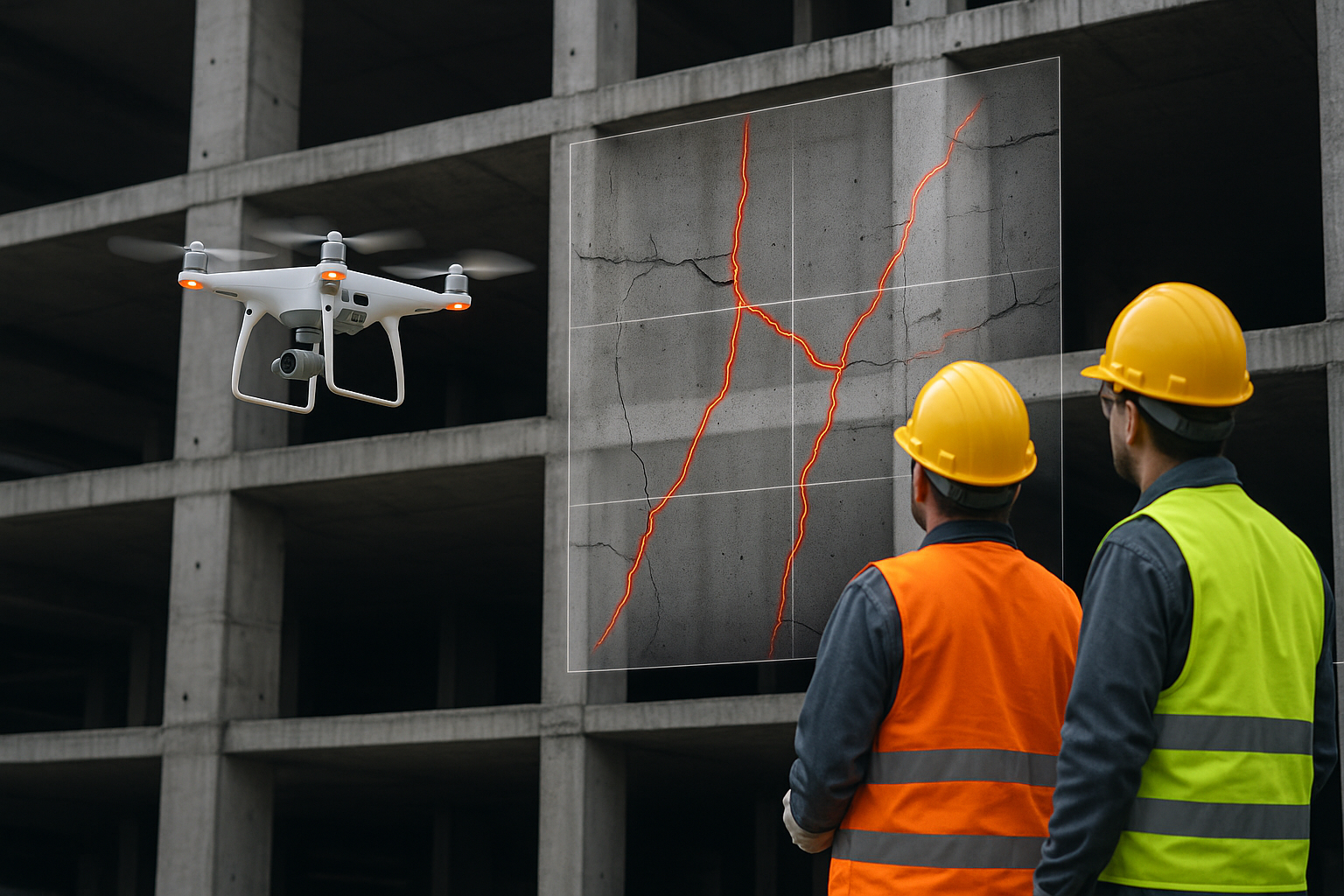
Concrete infrastructure—from bridges to high-rise buildings—requires regular inspection to detect cracking, spalling, corrosion, and structural weaknesses. Traditional inspections often involve scaffolding, lifts, and worker exposure to high-risk environments.
Why Drones Are Changing Concrete Inspections
1. Safe Access to Hard-to-Reach Areas
Drones allow inspectors to review areas that would typically require lifts or rope-access teams. This reduces danger and lowers project costs.
2. High-Resolution Visual Data
Modern DJI drones capture 4K–8K imagery that reveals micro-cracks, surface wear, moisture patterns, and reinforcement exposure.
3. Faster Inspection Timelines
A drone can inspect an entire structure in minutes instead of hours, minimizing operational downtime.
4. Thermal Imaging for Moisture & Hidden Damage
Thermal-equipped models identify temperature anomalies that indicate water intrusion, delamination, or early-stage faults invisible to the naked eye.
5. Digital Documentation
Drones create a highly accurate, time-stamped visual record for compliance, maintenance planning, and engineering reports.
Conclusion
Drones are revolutionizing how civil engineers inspect concrete structures—making the process faster, safer, and more precise.
Written by DJI Gear Portal. Article based on general drone inspection research — all content is original.