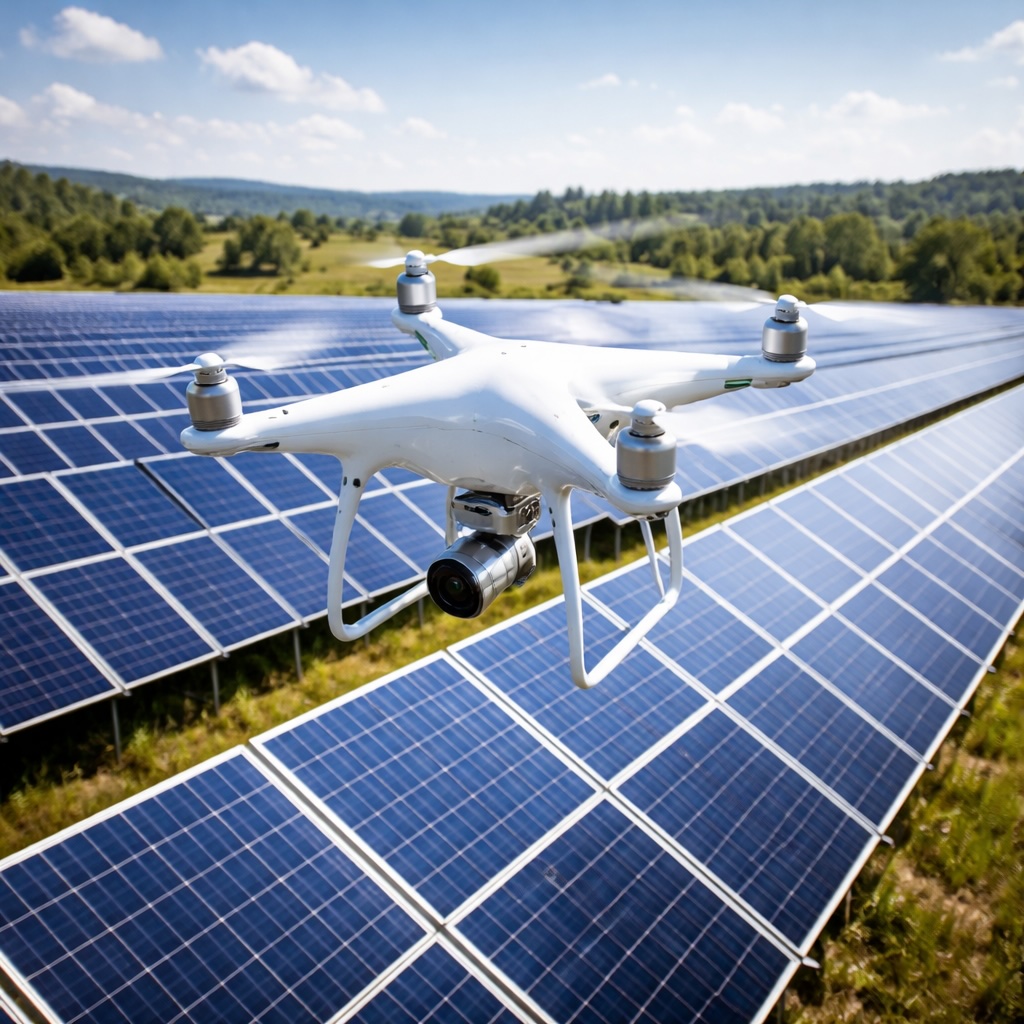
Solar energy is booming as more homes, businesses, and utility companies invest in clean, renewable power. But there's a problem: solar panels don't always work as efficiently as they should. Dirt, damage, manufacturing defects, and electrical issues can all reduce power output, costing money and wasting potential. DJI drones are solving this problem by making it fast, easy, and accurate to inspect solar installations and identify problems before they become expensive.
Solar panels are designed to last for decades, but they're not maintenance-free. Over time, panels can develop problems that reduce their efficiency. Micro-cracks in the cells can develop from hail, temperature changes, or manufacturing defects. Connections can corrode or come loose. Dirt, leaves, bird droppings, and other debris can block sunlight. Hot spots can develop where cells are failing, potentially leading to permanent damage or even fire hazards.
The challenge is that many of these problems aren't visible to the naked eye. A panel might look perfectly fine but be operating at reduced capacity. Traditional inspection methods either involve physically checking each panel, which is time-consuming and potentially dangerous, or monitoring system output data, which only tells you there's a problem somewhere without pinpointing exactly where.
This is where thermal imaging drones change everything. A DJI drone equipped with a thermal camera can fly over a solar installation and see temperature differences across the panels. Healthy panels operate at a consistent temperature. Faulty panels show up as hot spots or cold spots in the thermal image, making problems immediately visible.
A panel with a cracked cell will heat up differently than surrounding panels. A connection issue creates resistance, which generates heat. Shading or debris blocks light, making those areas cooler. Defective cells often run hotter than they should. The thermal camera sees all of this instantly, creating a visual map of which panels have problems and what kind of problems they are.
The drone can inspect hundreds or thousands of panels in a fraction of the time it would take a person to physically check each one. A large solar farm that might take days to inspect manually can be surveyed in hours with a drone. The inspection is also more thorough because the thermal camera catches issues that might not be visible during a physical inspection.
Thermal drone inspections can identify a wide range of solar panel issues. Hot spots indicate failing cells or poor connections that need attention. Cold spots reveal shading problems or panels that aren't generating power at all. Patterns of temperature variation can point to manufacturing defects affecting multiple panels from the same batch. Overheating bypass diodes show up clearly in thermal images. Even dirt and debris accumulation is visible because covered areas operate at different temperatures.
The inspection data also helps prioritize maintenance. Not every problem is urgent, and having a complete picture of the installation's condition helps maintenance teams focus on the issues that are costing the most lost production or pose safety risks.
Conducting a thermal drone inspection is straightforward. The operator plans a flight path that covers all the panels, typically flying in a grid pattern at a consistent height and speed. The flight usually happens in the middle of the day when panels are generating maximum power and temperature differences are most pronounced.
As the drone flies, it captures both regular photos and thermal images. The thermal camera records the temperature of every panel, creating a detailed heat map of the entire installation. The regular photos provide visual context and help identify non-thermal issues like physical damage or debris.
After the flight, the images are analyzed to identify anomalies. Many systems can automatically flag hot spots and other temperature variations, making it easy to spot problems quickly. The location of each problem panel is precisely known from the GPS data, so maintenance crews know exactly where to go.
Regular drone inspections do more than just find current problems. They create a baseline of the installation's condition and track how it changes over time. This historical data helps identify trends, predict future maintenance needs, and verify that repairs were effective.
For solar farm operators, this means better planning and budgeting. Instead of reacting to failures or waiting until production drops significantly, they can schedule preventive maintenance based on actual inspection data. This reduces downtime, maximizes power production, and extends the life of the installation.
Inspections also provide valuable documentation for warranty claims, insurance purposes, and compliance reporting. Having detailed records of the installation's condition and maintenance history protects the investment and demonstrates due diligence.
Safety is a major benefit of drone inspections. Solar panels are typically installed on rooftops, ground arrays in remote locations, or utility-scale farms covering many acres. Physically inspecting these installations means working at heights, in hot conditions, and around electrical equipment. Drones eliminate much of this risk by keeping inspectors safely on the ground.
The efficiency gains are substantial. An inspector can cover more ground in less time with better results. This means lower inspection costs and the ability to inspect more frequently, catching problems earlier when they're cheaper to fix.
If you manage solar installations or provide solar maintenance services, DJI drones with thermal imaging capabilities can transform your inspection process. From residential rooftop arrays to massive solar farms, the right drone makes inspections faster, safer, and more effective.
Explore DJI Thermal SolutionsNot every drone is suitable for solar inspections. The key requirement is a quality thermal camera that can accurately detect temperature differences. DJI offers several drones with thermal imaging capabilities. The Mavic 4 Pro with thermal option provides excellent portability and image quality for most solar inspection work. Its compact size makes it easy to transport between sites, and its thermal camera is sensitive enough to detect the temperature variations that indicate panel problems.
For larger commercial operations or professional inspection services, the Matrice series drones offer even more capabilities with higher resolution thermal cameras and longer flight times. These industrial drones can handle the demands of inspecting massive solar farms efficiently.
Drone inspections scale to fit any size installation. A residential solar array on a rooftop might take just a few minutes to inspect thoroughly. A commercial installation covering a large building or parking structure might take an hour. A utility-scale solar farm with thousands of panels might take a full day, but that's still far faster than any manual inspection method.
The same technology and approach works across all these scales. The principles of thermal inspection remain consistent whether you're looking at ten panels or ten thousand. This makes drone inspection services accessible to everyone from homeowners to utility companies.
The cost of a thermal inspection drone might seem significant initially, but the return on investment comes quickly. Finding and fixing even a few underperforming panels can pay for the drone through increased power production. Preventing a single fire or major failure more than justifies the investment. And the ability to inspect regularly means catching problems early when repairs are simpler and cheaper.
For solar installation companies, offering drone inspection services creates a new revenue stream and adds value for customers. For facility managers with solar installations, having inspection capability in-house provides better control over maintenance and costs.
As solar energy continues to grow, drone inspections are becoming standard practice rather than a luxury. The technology keeps improving, with better thermal cameras, more automated analysis, and easier-to-use systems. Some inspection services are even exploring fully automated inspections where drones fly scheduled missions and report problems without human intervention.
For anyone involved in solar energy, whether installing systems, maintaining them, or simply owning one, understanding how drone thermal inspections work is increasingly important. This technology helps ensure solar installations deliver the clean energy and cost savings they promise, making renewable energy more reliable and effective for everyone.
For a full breakdown of current DJI models, see our Best DJI Drones Comparison Guide.
If you're unsure which model to choose, read our DJI Drone Buying Guide.