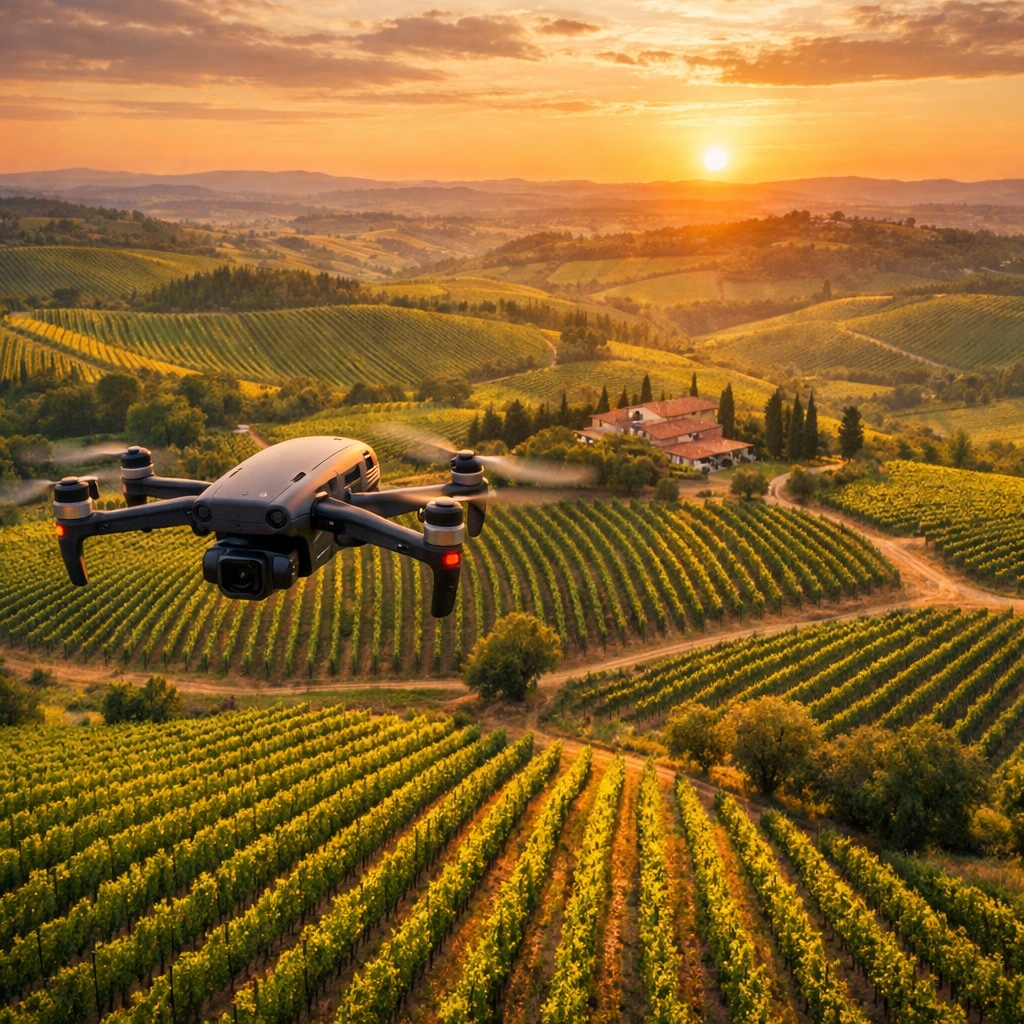
Growing quality wine grapes requires careful attention to vine health, water management, and countless other factors that affect grape development and final wine quality. Vineyard managers have traditionally walked their rows regularly, observing conditions and making decisions based on what they could see from the ground. DJI drones are adding a new dimension to vineyard management, providing aerial perspectives and data analysis capabilities that help growers optimize every aspect of grape production.
Vineyards are not uniform environments. Even within a single block of vines, soil conditions vary, water availability differs, and individual vines show different levels of vigor and health. These variations affect grape quality and harvest timing, making uniform management approaches less than ideal. The challenge is identifying these differences and responding appropriately across dozens or hundreds of acres of vines.
Traditional vineyard management relies heavily on walking the rows and observing conditions firsthand. This approach works but has limitations. It's time-consuming to cover large vineyards thoroughly. Subtle problems might not be obvious until they've progressed significantly. Variations between different areas might be hard to detect when you're observing everything at ground level over extended periods.
Drones provide a different perspective that complements traditional observation. Flying over the vineyard reveals patterns that aren't obvious from the ground. Variations in vine vigor show clearly in aerial imagery. Problem areas stand out when you can see the entire block at once. This bird's eye view helps managers understand their vineyards better and make more informed decisions about how to manage different areas.
Healthy vines with appropriate vigor produce the best grapes. Too much vigor leads to excessive foliage that shades fruit and affects grape development. Too little vigor might indicate stress, disease, or nutritional problems. Understanding vigor variations across the vineyard helps managers respond appropriately in different areas.
Drones capture this information through specialized imaging. Regular RGB cameras show visual condition, but more sophisticated sensors provide additional insights. Multispectral cameras measure how vines reflect different wavelengths of light, including some outside the visible spectrum. This data reveals plant health and vigor in ways that aren't visible to the naked eye.
The resulting vegetation indices quantify vine vigor and health across the entire vineyard. Color-coded maps show which areas have high vigor, moderate vigor, or are showing stress. These maps help vineyard managers target their attention and resources where they're most needed. Areas of low vigor might need additional water or nutrients. Areas of excessive vigor might benefit from canopy management or adjusted irrigation.
Vine diseases and pest infestations can spread quickly if not detected and treated early. Traditional scouting involves walking rows looking for signs of problems, but early-stage infections or pest populations might be missed until they've spread significantly. Drones help identify problems earlier when they're easier to treat and before they cause significant crop loss.
Changes in vine health often show in aerial imagery before symptoms are obvious from the ground. Stress from disease or pest pressure affects how plants reflect light, and these changes become visible in multispectral imagery early in the problem's development. Vineyard managers can investigate areas flagged by aerial surveys, confirm the issue, and begin treatment before the problem spreads widely.
This early detection saves money and protects crop quality. Treating small affected areas costs less than dealing with widespread problems. Catching issues before they significantly impact fruit quality protects the vintage and ensures grapes meet quality standards for premium wine production.
Water management is critical in viticulture. Vines need adequate water but not excessive amounts. Too much water can dilute flavors and reduce grape quality. Too little water stresses vines and can harm fruit development. The ideal is controlled water stress at the right times to concentrate flavors while maintaining adequate vine health.
Drones help optimize irrigation by showing how vines respond to watering in different areas. Thermal cameras detect temperature differences that indicate water stress. Areas where vines are warmer than surrounding blocks might be experiencing water shortage. Areas that stay cooler might be receiving adequate moisture or even excess water.
This information helps managers adjust irrigation precisely. Rather than watering the entire vineyard uniformly, they can vary water application based on what different areas actually need. This precision irrigation saves water while ensuring each area receives optimal moisture for quality grape production.
In regions facing water restrictions or drought conditions, this precision becomes even more valuable. Making the most of limited water resources while maintaining grape quality requires detailed understanding of where water is most needed and most beneficial. Drone data provides that understanding.
Harvest timing dramatically affects wine quality. Grapes must be picked when they reach optimal ripeness, but that timing varies across the vineyard. Some blocks ripen earlier than others due to differences in sun exposure, elevation, soil, or vine age. Identifying these variations and planning harvest accordingly helps maximize quality across the entire crop.
Aerial surveys throughout the growing season document how different blocks are developing. This information helps predict which areas will be ready for harvest first and allows managers to plan picking schedules efficiently. Rather than harvesting entire vineyards uniformly, premium wineries can pick blocks at their individual optimal times, ensuring each lot reaches the winery at peak quality.
This selective harvesting based on actual block maturity rather than calendar dates or averages across the property helps wineries produce better wines. Each block contributes grapes at their best rather than compromising some blocks to accommodate overall harvest timing.
Whether you manage a small family vineyard or oversee hundreds of acres of premium wine grapes, DJI drones provide insights that help optimize every aspect of viticulture. From monitoring vine health to precision irrigation, aerial data supports better decision-making throughout the growing season.
Discover DJI Agricultural SolutionsManaging vine canopy affects light exposure to fruit, air circulation, disease pressure, and grape development. Decisions about leaf removal, shoot positioning, and hedging influence final grape quality. Understanding how canopy density varies across the vineyard helps managers target canopy work where it provides the most benefit.
Aerial imagery shows canopy variations clearly. Dense areas that might benefit from thinning show up distinctly from more open areas that might need less intervention. This information helps crews work efficiently, focusing intensive canopy management on areas where it matters most while minimizing labor on blocks that naturally maintain appropriate canopy structure.
Throughout the season, repeated aerial surveys track how canopy develops and how different management approaches affect vine growth in various areas. This feedback helps refine canopy management strategies over time, improving outcomes in future seasons based on documented results.
Understanding vineyard topography and soil variations helps explain why different areas perform differently. Drones create detailed elevation models showing slopes, aspects, and drainage patterns. This terrain information combined with vegetation data helps managers understand the relationships between site characteristics and vine performance.
Some areas might show consistent stress not because of management issues but because of shallow soils or poor drainage. Other areas might consistently show high vigor because of deeper soils or better water availability. Understanding these inherent site characteristics helps managers set appropriate expectations and management strategies for different zones within the vineyard.
This analysis supports precision viticulture approaches where the vineyard is divided into management zones based on soil, terrain, and performance characteristics. Each zone receives tailored management—different irrigation schedules, fertilization programs, or canopy approaches—based on what that particular area needs and can support.
Late spring frosts can devastate vineyards, damaging newly emerging growth and reducing or destroying the crop for that year. Protecting vines from frost requires knowing which areas are most vulnerable and responding quickly when frost threatens. Drones equipped with thermal cameras help identify cold spots where frost protection efforts should focus.
During frost events, thermal imaging reveals temperature variations across the vineyard. Lower-lying areas or frost pockets that cool faster show clearly as colder zones. This information helps managers position frost protection equipment optimally and focus resources on the most vulnerable areas.
After frost events, aerial surveys document damage extent and help managers assess crop loss. This information supports insurance claims and helps plan management adjustments for the affected season.
Drone data integrates with other precision agriculture tools and technologies. GPS-guided tractors can use maps generated from drone surveys to vary fertilizer or spray applications across the vineyard. Soil sensors, weather stations, and other monitoring systems combine with aerial data to create comprehensive pictures of vineyard conditions.
This integration creates data-driven management systems where decisions are based on multiple information sources analyzed together. The result is more precise management that responds to actual conditions rather than assumptions or broad generalizations.
The investment in drone technology for vineyard management pays returns through multiple channels. Better vine health monitoring reduces crop losses from undetected problems. Precision irrigation saves water costs while maintaining or improving grape quality. Optimized harvest timing produces better wines that can command premium prices. More efficient canopy management reduces labor costs while improving outcomes.
For premium wineries where grape quality directly affects wine prices and reputation, even small improvements in fruit quality from better vineyard management can generate significant value. The data-driven approach that drones enable helps capture that value consistently season after season.
Vineyard applications benefit from drones that combine good cameras with specialized sensors. The DJI Mavic 4 Pro provides excellent baseline capabilities with its high-resolution camera suitable for visual assessment and documentation. For operations wanting multispectral imaging capabilities, there are sensor options that attach to or integrate with DJI drones.
Flight planning software helps vineyard managers create systematic survey patterns that cover entire blocks efficiently. These automated missions ensure consistent imaging from one flight to the next, making it easier to compare conditions over time and track changes through the growing season.
Drone technology in viticulture continues to evolve. Better sensors provide more detailed information about vine conditions. Improved software makes data analysis more automated and accessible. Integration with other vineyard management systems becomes more seamless. These advances make precision viticulture increasingly practical for vineyards of all sizes.
For vineyard managers committed to producing the highest quality grapes, understanding and using drone technology is becoming essential rather than optional. The tool provides insights that simply aren't available through traditional observation methods, helping growers make better decisions about every aspect of vineyard management. In an industry where quality differences matter immensely, having better information creates real competitive advantages that show up in wine quality and business results.